Google and Meta have dominated digital advertising for years. But a new player is entering the conversation: ChatGPT Ads.
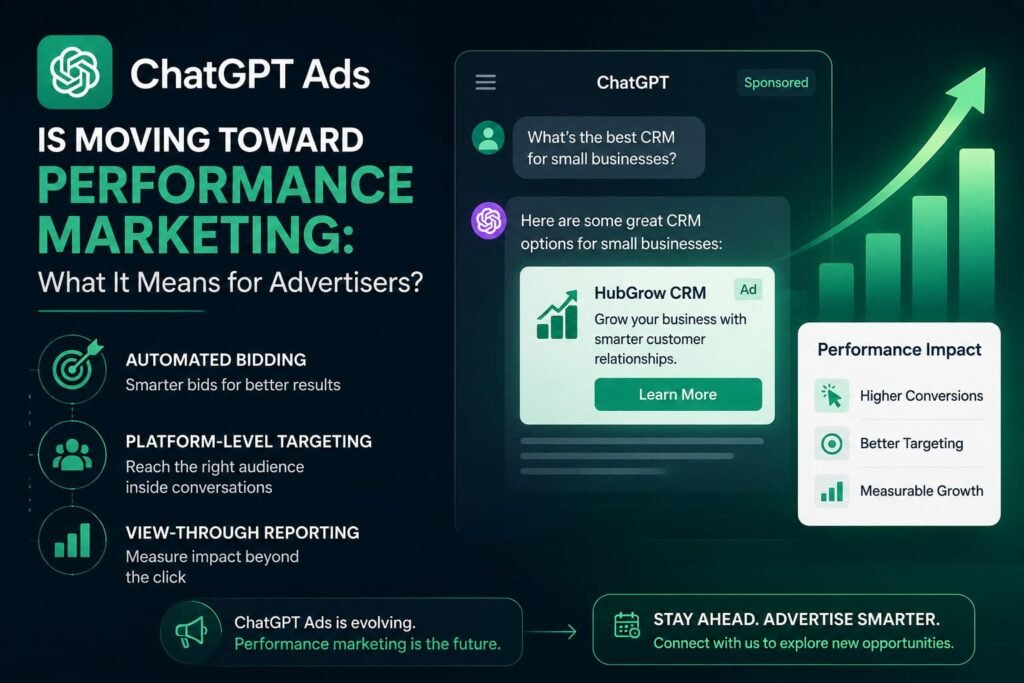
As ChatGPT develops its advertising capabilities, it’s starting to look more like a performance marketing platform. Features such as automated bidding, platform-level targeting, and view-through conversion reporting could give advertisers more ways to reach audiences and measure results. But what does this actually mean for marketers?
Quick Answer
ChatGPT Ads is moving toward performance marketing by introducing features such as automated bidding, platform-level targeting, and view-through conversion reporting. These tools can help advertisers target relevant audiences, optimise campaigns, and better understand conversions.
While it’s too early to say that ChatGPT Ads will replace Google or Meta, it could become an important advertising channel as more people use AI to research products, compare options, and make purchasing decisions.
For businesses, the best approach is to test new AI advertising opportunities while continuing to use SEO, Google Ads, social media, and other digital marketing channels
Table of Contents
What Is ChatGPT Ads?
ChatGPT Ads refers to advertising opportunities within the ChatGPT experience. The interesting part is that people don’t just use ChatGPT to search for quick answers. They use it to research products, compare options, ask for recommendations, and solve problems. That creates a potentially valuable environment for advertisers. Instead of targeting only a short keyword, AI platforms can understand more context around what someone is trying to achieve.
What Is Automated Bidding?
Automated bidding allows the platform to adjust advertising bids based on campaign goals and available data. Instead of manually changing bids, advertisers can let the system optimise toward goals such as getting more conversions or improving efficiency. For marketers, this can save time and make campaign management easier.
What Is Platform-Level Targeting?
Targeting helps advertisers reach the people most relevant to their business. With platform-level targeting, advertisers can potentially control where and how their ads are shown within the ChatGPT environment. This is particularly interesting because users often provide more context in an AI conversation than they would in a traditional search query. For example, someone might explain their budget, requirements, preferences, and problems in one conversation. That gives AI advertising a potentially different approach to understanding intent.
What Is View-Through Conversion Reporting?
Not every customer clicks an ad before converting. Someone might see an ad, continue browsing, and later visit the business directly. View-through conversion reporting helps advertisers understand these types of interactions. It gives marketers another way to measure whether an ad impression may have contributed to a conversion. However, advertisers should still look at attribution carefully because customers often interact with several marketing channels before making a purchase.
ChatGPT Ads vs Google and Meta
It’s natural to compare ChatGPT Ads with Google Ads and Meta Ads. Google Ads is extremely strong when people are actively searching for a product or service. Meta Ads is powerful for reaching audiences based on interests, behaviour, and other signals.
ChatGPT Ads could offer something different: conversational context. A user may explain exactly what they’re looking for instead of entering a short search query. That could create interesting opportunities for advertisers, particularly when people are researching or comparing options. However, it’s still too early to say that ChatGPT Ads will replace Google or Meta.
What Should Businesses Do?
There’s no need to move your entire advertising budget to a new platform. Instead, keep an eye on how ChatGPT Ads develops. If it becomes available and relevant to your audience, test it with a controlled budget. Focus on real business metrics such as:
- Cost per lead
- Conversion rate
- Customer acquisition cost
- Revenue
- Return on ad spend
Don’t judge a campaign simply by how many people saw an advertisement.
Don’t Forget Your Website
Advertising can bring people to your website, but your website still needs to convert them. A slow website, confusing landing page, or unclear call-to-action can waste an otherwise good advertising campaign. That’s why paid advertising should work alongside SEO, content marketing, website optimisation, and conversion-focused landing pages.
Want Better Results From Digital Marketing?
Don’t let changing advertising platforms make your marketing strategy complicated. At Hubster Marketing, we help businesses attract more customers through SEO, paid advertising, social media marketing, content marketing, and other digital marketing services.
Whether you want more website traffic, qualified leads, or better online visibility, we’ll help you create a strategy focused on measurable growth.
Final Thoughts
ChatGPT Ads is moving closer to the performance marketing model advertisers already know from Google and Meta. Automated bidding, targeting, and conversion reporting could make AI advertising a channel worth watching.
It’s still early, but businesses that test new opportunities, track real results, and keep their marketing strategy flexible will be better prepared for what’s coming next. The future of digital advertising may not belong to one platform. It may belong to businesses that know how to use the right platforms together.
Ready to grow your business online? Contact Hubster Marketing today and let’s build a digital marketing strategy around your goals.