Google Search is becoming more personal. The results you see aren’t always the same as what someone else sees. Google increasingly uses personalisation to help people find information that’s more relevant to their interests, the sources they follow, and the way they use Search. That’s where features like Google Preferred Sources, Tailor Your Feed, and Search Profiles come into the picture.
At first, these features may sound like different names for the same thing. They’re not. Each one has a different purpose, and understanding that difference is becoming increasingly useful for publishers, businesses, content creators, and SEO professionals. Let’s break them down in simple terms.
What Are Google Preferred Sources?
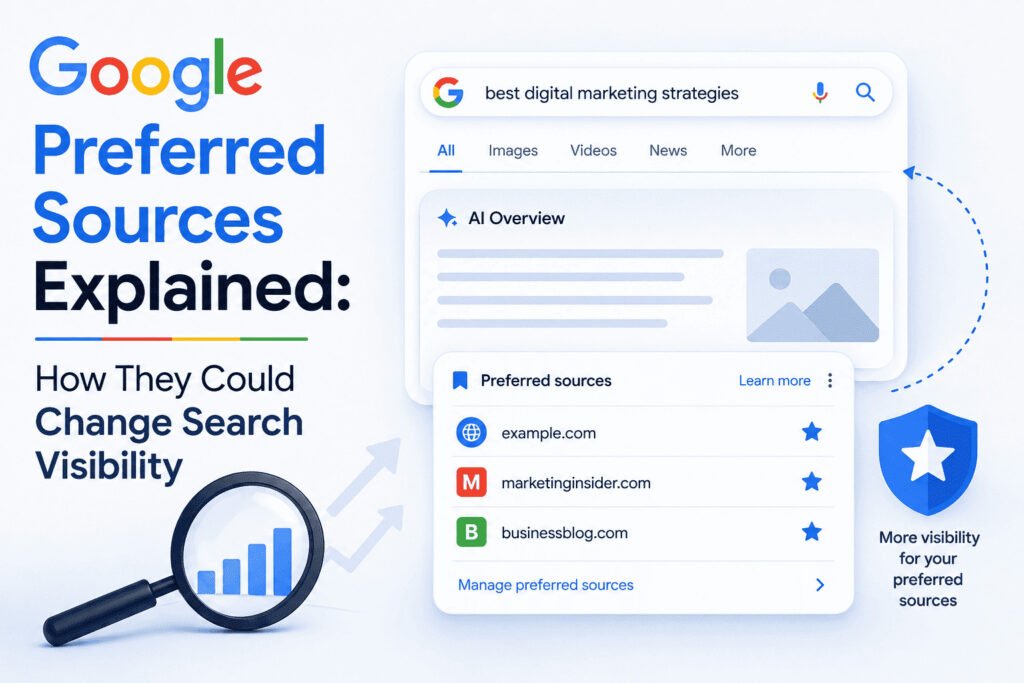
Google Preferred Sources is a personalisation feature that allows users to get more content from sources they prefer. Think about how you normally search for information. Maybe you regularly read content from a particular news website, technology publication, business blog, or industry website. If you trust that source, you may naturally want to see more of its content. Preferred Sources gives users a way to indicate those preferences.
Google can then use those preferences to influence what users see across relevant Search experiences, including AI Mode. For publishers, this is particularly interesting. It suggests that Search visibility isn’t always just about where a page ranks for a keyword. A user’s preference for a particular source can also play a role in what they discover.
Why Do Google Preferred Sources Matter for SEO?
Traditional SEO has usually been pretty straightforward: Find a keyword → create a page → optimise it → build authority → try to rank higher. But personalised Search adds another layer. Imagine two people searching for the same topic. Both may see useful results, but their experiences don’t necessarily have to be identical. Their interests, preferences, and interactions with Google can influence what they see.
That means publishers have another reason to focus on becoming a trusted and recognisable source, rather than simply trying to rank for as many keywords as possible. The bigger question becomes: “Does my audience recognise and trust my website enough to want more of my content?” That’s a very different way of thinking about SEO.
What Is Tailor Your Feed?
This is where things can get confusing. Tailor Your Feed is not the same thing as Preferred Sources. Tailor Your Feed is associated with Google Discover. Discover is Google’s personalised content feed, where users can find articles, videos, and other content based on their interests. For example, someone who regularly follows:
- Digital marketing
- Technology
- Cricket
- Travel
- Business
- Photography
may want to see more content around those subjects. Tailor Your Feed helps users influence the kind of content that appears in their Discover experience. So, in simple terms: Preferred Sources is about sources you prefer. Tailor Your Feed is about the content you want to discover. That’s an important distinction.
What Are Google Search Profiles?
Search Profiles are another separate feature. They give a source a dedicated presence within Google Search, making it easier for users to identify and explore that source and its content. Instead of being seen only as another individual search result, a source can have a more recognisable presence that helps users discover more of what it publishes. This matters because brand recognition is becoming increasingly important in Search.
People don’t always click the first result they see. Sometimes they look for a website they already know. Sometimes they recognise an author or publication. And sometimes they deliberately search for information from a source they trust. Search Profiles fit into that broader shift toward stronger connections between users and content sources.
Google Preferred Sources vs Tailor Your Feed vs Search Profiles
If you’re an SEO professional, publisher, or business owner, it’s worth keeping these three features separate.
| Feature | What It Does | Where It Fits |
|---|---|---|
| Google Preferred Sources | Helps users see more content from sources they prefer | Google Search, including relevant AI experiences |
| Tailor Your Feed | Helps users influence the content they see | Google Discover |
| Search Profiles | Gives a source a dedicated presence | Google Search |
An easy way to remember them is:
- Preferred Sources → “I want more from this source.”
- Tailor Your Feed → “I want more of these topics.”
- Search Profiles → “Show me more from this source.”
They may all contribute to a more personalised Google experience, but they aren’t one combined product.
Why Should SEO Professionals Pay Attention?
SEO has traditionally been heavily focused on rankings. You check your keyword positions, look at competitors, improve your content, build links, and try to move higher in Google’s results. That’s still important. But Search is becoming more complicated. Google can now present information through traditional results, AI-generated answers, Discover, personalised recommendations, and other Search experiences.
As a result, visibility is becoming broader than rankings alone. Instead of only asking: “What position does my website rank at?” SEO professionals should also ask: “How is my content being discovered, and are people becoming familiar with my brand?” That’s where these features become particularly interesting.
What Does This Mean for Publishers?
For publishers, the message is fairly simple: Build something people actually want to follow. Publishing content just to target keywords isn’t enough. You want people to recognise your website, trust your information, and come back when they need answers. That starts with a few basic things.
Publish genuinely useful content
Don’t create an article simply because a keyword has search volume. Start with the reader. What are they trying to understand? What problem are they trying to solve? What information would actually help them? Answer those questions clearly.
Develop expertise
If your website covers a subject consistently and provides genuinely useful information, it becomes easier to establish a reputation around that topic. Instead of writing about everything, focus on areas where your business or publication can provide real value.
Make your brand recognisable
Your content should feel like it comes from a real source with a clear identity. Consistent branding, useful insights, original research, strong authorship, and a good user experience can all help make your website more memorable.
Give people a reason to return
The strongest publishers aren’t just chasing one-time clicks. They’re building audiences. If readers find your content useful today, you want them to remember your website tomorrow. That’s becoming increasingly valuable in a more personalised Search environment.
Does This Mean Traditional SEO Is Dead?
No. Not even close. Technical SEO still matters. Keyword research still matters. Search intent still matters. Content quality, internal linking, website performance, authority, and relevance still matter. What’s changing is the number of ways users can discover information.
Google doesn’t have to rely on a simple list of ten blue links anymore. Users can discover content through Search, AI experiences, Discover, personalised recommendations, and source-focused features. So the goal shouldn’t be to replace traditional SEO. It should be to build on top of it.
How Should Businesses Prepare?
Businesses don’t need to completely rebuild their SEO strategy every time Google introduces a new feature. Instead, focus on the fundamentals. Start by understanding your audience. Find out what they search for, what questions they have, and what problems they’re trying to solve.
Then create content that genuinely addresses those needs. But don’t stop at SEO. Build your brand too. A strong online presence comes from several channels working together — including SEO, content marketing, social media, paid advertising, and a website that gives visitors a good experience.
Need Help Building a Stronger Digital Presence?
Keeping up with Google’s changing Search features can be difficult, especially when you’re already focused on running your business. If your website isn’t getting the visibility or leads you’re looking for, it may be time to look at your overall digital marketing strategy, rather than focusing on rankings alone.
At Hubster Marketing, we help businesses improve their online presence through SEO, content marketing, social media marketing, paid advertising, and other digital marketing solutions.
Whether your goal is to attract more organic traffic, generate qualified leads, improve Google visibility, or build a stronger brand online, we can help create a strategy around your business goals. Want to grow your business online? Get in touch with Hubster Marketing and let’s build a digital marketing strategy that works for you.
Don’t Try to Hack Every New Google Feature
Whenever Google introduces something new, there’s usually a rush to find an “SEO trick” that will take advantage of it. That’s understandable. But it’s rarely the best long-term strategy. You shouldn’t start changing your entire website just because Google has introduced Preferred Sources. You don’t need to rewrite every article.
You don’t need to stuff your content with keywords. And you certainly shouldn’t create content that provides little value just because you think it might appear in a new Search feature. Instead, focus on what you can control:
- Create useful content
- Understand your audience
- Demonstrate genuine expertise
- Build a recognisable brand
- Keep your website technically healthy
- Make content easy to understand
- Monitor your organic traffic and conversions
- Keep improving based on actual data
Those fundamentals are much more likely to survive Google’s next update.
Is Personalisation the Future of Search?
Google Preferred Sources, Tailor Your Feed, and Search Profiles are part of a much larger change happening in Search. Google is increasingly trying to understand what individual users want, rather than showing exactly the same experience to everyone. That’s an important shift. Search is moving from: “Here are some websites that match your query.” toward: “Here is information that may be most useful to you.” For publishers and businesses, that means building a relationship with your audience could become just as important as ranking for individual keywords.
What Is the Biggest SEO Takeaway?
The biggest lesson isn’t that you need to optimise for three new Google features. it’s that SEO is becoming more focused on discovery, trust, and relationships. Ranking well is still valuable. But being a source that people recognise, trust, follow, and return to can create an even stronger position over time. That’s why businesses should think beyond individual rankings and start looking at the bigger picture.
Where are people discovering your brand? Are they returning to your website? Are they engaging with your content? Are they searching for your brand by name?Are they finding you through multiple Google experiences? These questions can tell you much more about your long-term visibility.
Final Thoughts
Google Preferred Sources, Tailor Your Feed, and Search Profiles are different features, but they all point toward a more personalised Search experience. Preferred Sources can influence the sources users see across relevant Search experiences, including AI Mode. Tailor Your Feed is connected to Google Discover and helps users influence what appears in their feed. Search Profiles give sources a dedicated presence that can make their content easier for users to find and explore.
For SEO professionals and publishers, the takeaway is simple: Don’t focus only on ranking. Focus on becoming a source people want to find. Create useful content. Build expertise. Earn trust. Develop your brand. Because as Google Search becomes more personalised, the businesses and publishers that people recognise and trust may have an important advantage.
And if you want help building that visibility across search and other digital channels, a strong, well-rounded digital marketing strategy can make the difference.
Want your business to be easier to find online? Get in touch with Hubster Marketing today and let’s start building your digital growth strategy.